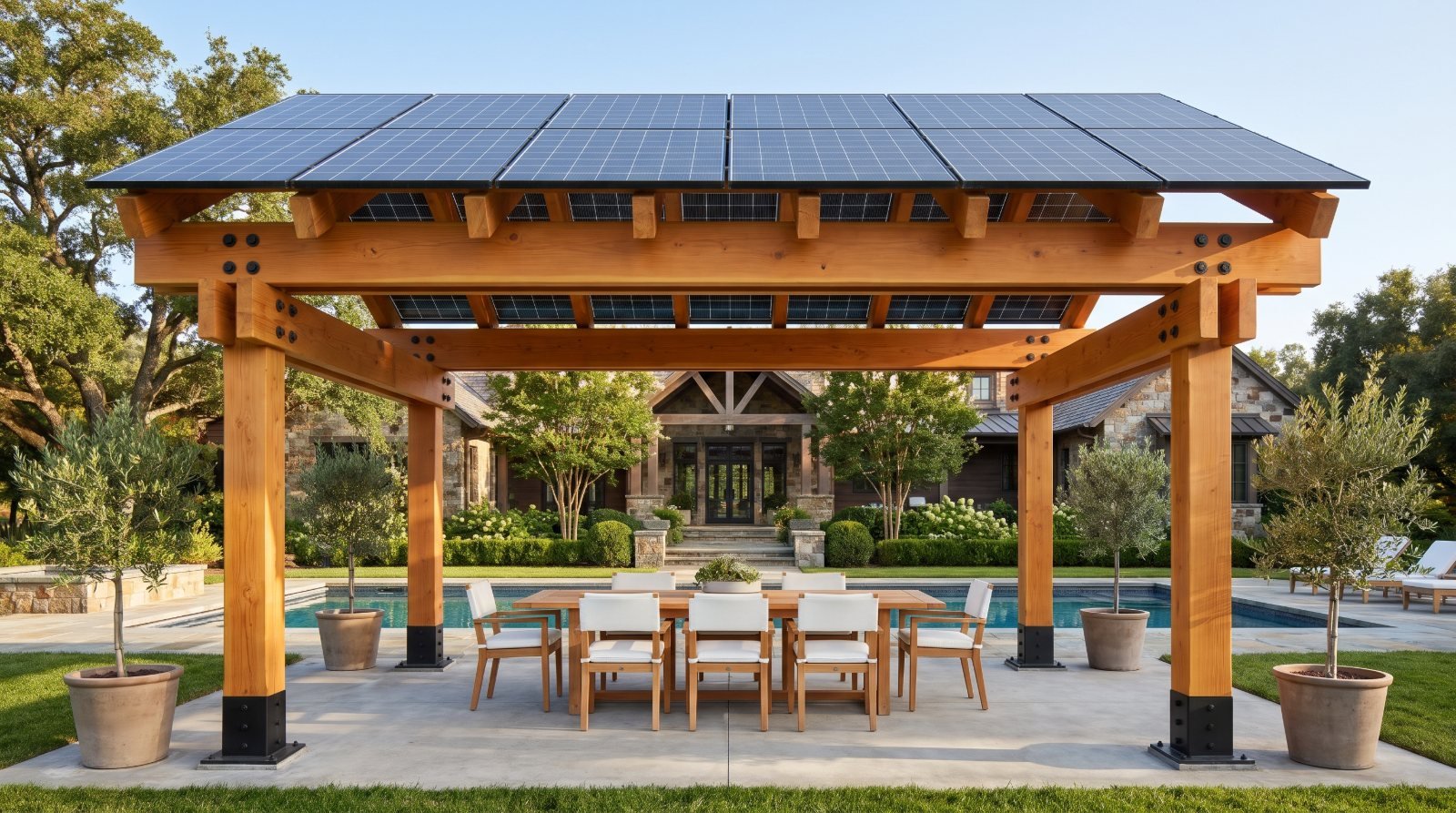
Pool house plans
Shade by the water, a roof that runs the pump and warms the pool on sunshine, and a post and beam that makes the whole backyard look better.
Late afternoon, feet up in the shade, the water warm and the pump running on sunshine. That’s the whole idea.
In short: Our pool house is open-air: a heavy timber frame with a solar roof and no walls, what many people would call a pool cabana. The roof runs the pool by itself: the pump, the salt system and the lights, without touching the house wiring. Solar thermal collectors on part of the roof warm the water, and one end can hide the pool equipment or hold a hot tub.
The best spot in the yard for solar
Pools and trees don't mix. Leaves foul the water and shade keeps it cold, so the ground around a pool is usually wide open to the sky. That's exactly what solar panels need. The space you already cleared for the pool is the best spot on the property for a solar roof.
Ours is an open-air pool house: a heavy post and beam with a solar roof and no walls. It gives you shade at the water's edge, a place for the table and the lounge chairs, and the look of a well-built barn instead of an umbrella.
It runs the pool pump on sunshine
The pool pump runs for hours every day, and it's one of the bigger power users at a house with a pool. The solar roof runs it while the sun is up, and a battery can carry it into the evening. The pool lights and the equipment run off the same roof.
On a saltwater pool, that includes the salt chlorine generator. A salt pool is still a chlorine pool: the generator makes the chlorine from salt, using electricity whenever the pump runs. The roof makes that electricity, so the sun runs the pump, makes the chlorine and warms the water.
For your electrician: how it’s powered
- The pool house is its own stand-alone system for the pump, the salt chlorine generator, the lights and the equipment, with no tie-in to the house panel.
- A battery can carry the pump into the evening.
- How much of the pump the roof covers depends on the pump and the roof size, so it’s sized to your equipment.
- It can grow later to back up the house, charge a vehicle or tie to the grid: see the pool house microgrid.
Electricians: ·
And it hides the ugly part
Pumps, filters and heaters are loud and ugly, and most of them sit out in the open. One end of the pool house can screen the equipment under the same roof, out of sight and out of the weather.

It heats the pool, too
The roof can carry two kinds of solar. Solar panels make electricity for the pump and the lights. Solar thermal collectors heat the pool water directly: the water runs through rows of tubes on part of the roof and comes back warmer. Turning sunlight straight into heat captures far more of the sun's energy than turning it into electricity, so for heating, square foot for square foot, thermal wins.
The pool sits right beside the roof, so the plumbing run is short, and the same pump the sun is already running pushes the water through the collectors. Electric panels on part of the roof, thermal tubes on the rest: one post and beam, both jobs. It stretches the swim season into spring and fall.
When people search for a "solar pool heater," this is what they mean: water heated by the sun, not by a power bill.
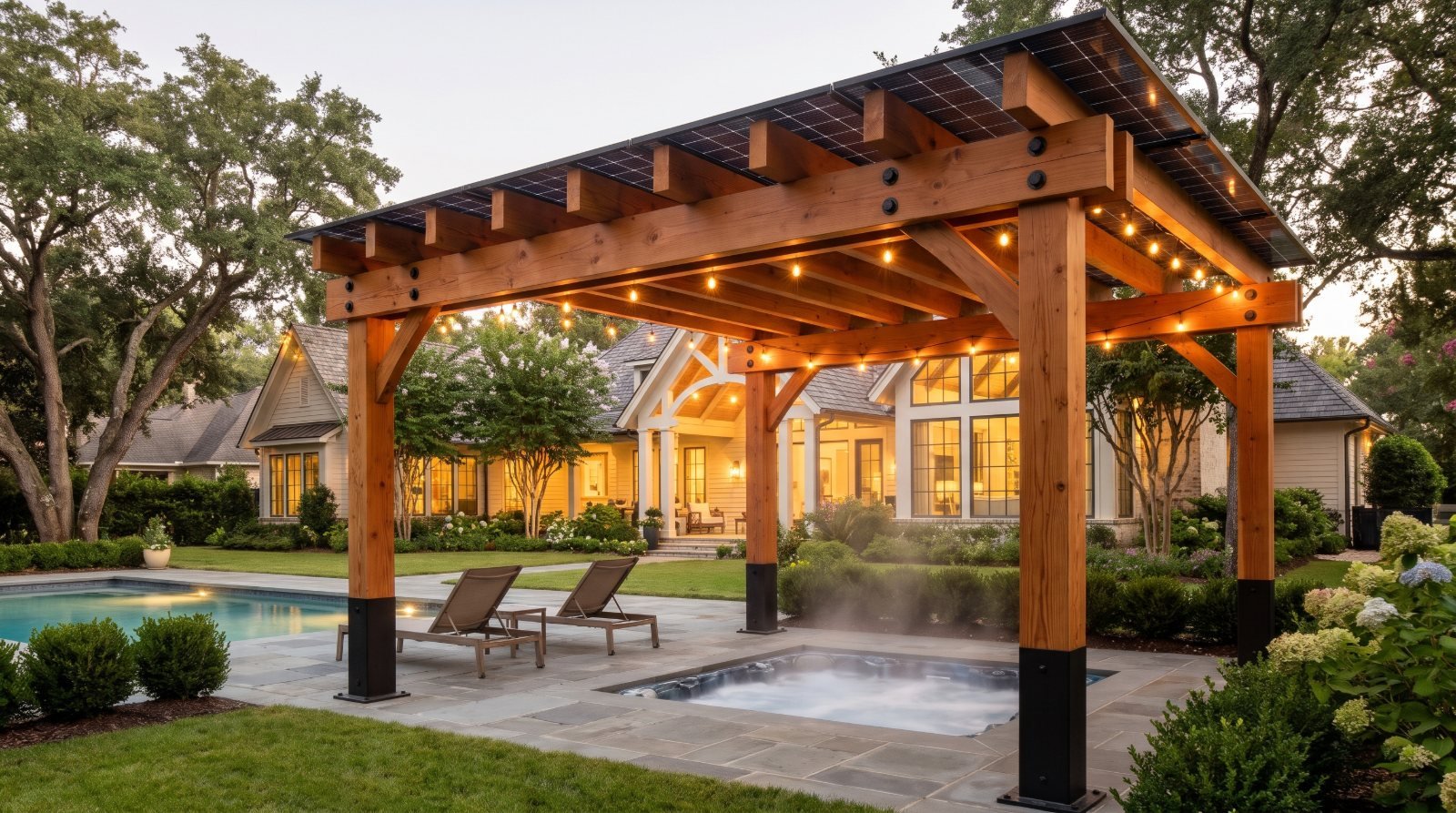
Room for the hot tub
A hot tub fits under the same roof. Give it its own bay on its own concrete pad, keep that bay open so the steam can get out and let the solar roof help pay to keep the water hot. More in post and beam hot tub gazebo.
Pool house, cabana or pergola: what’s the difference?
| What it is | |
|---|---|
| Pool house | Usually an enclosed building with walls, often with a bathroom or changing room |
| Pool cabana | An open or partly open shelter for shade by the pool |
| Pool pergola | Open rafters overhead, light shade |
| Our post and beam pool house | An open-air heavy post and beam with a full solar roof that powers the pool |
The solar pergola → Post and beam pavilion → How the kit works →
Start with the pool house running itself, then add the house, the car or the grid: the pool house microgrid.
More ideas: 26 post and beam pergola ideas, from pool houses to docks.
Every wire hidden: see how we plan the lights, fans and outlets into the frame.
Straight answers
Is this a pool house or a cabana?
It's an open-air pool house: a heavy post and beam and a solar roof, with no walls. Some people would call it a cabana or a pavilion.
Can the solar roof run my pool pump?
On sunny days, yes. How much of the pump it covers depends on the pump and the size of the roof, so we size it to your equipment.
Does it connect to my house?
It doesn't have to. It can run the pump, the lights and the pool equipment as its own system.
Can the roof heat the pool?
Yes. Solar thermal tubes on part of the roof warm the pool water directly, while electric panels on the rest run the pump. It stretches the swim season into spring and fall.
Will the panels make it hot under the roof?
No. The panels make shade, and the open sides let the breeze through.
Tell us about your place
Say what you want to build, or what you want to keep running when the power is out. We’ll tell you straight what it would take.